Black Bears and Coexisting with Wild Animals
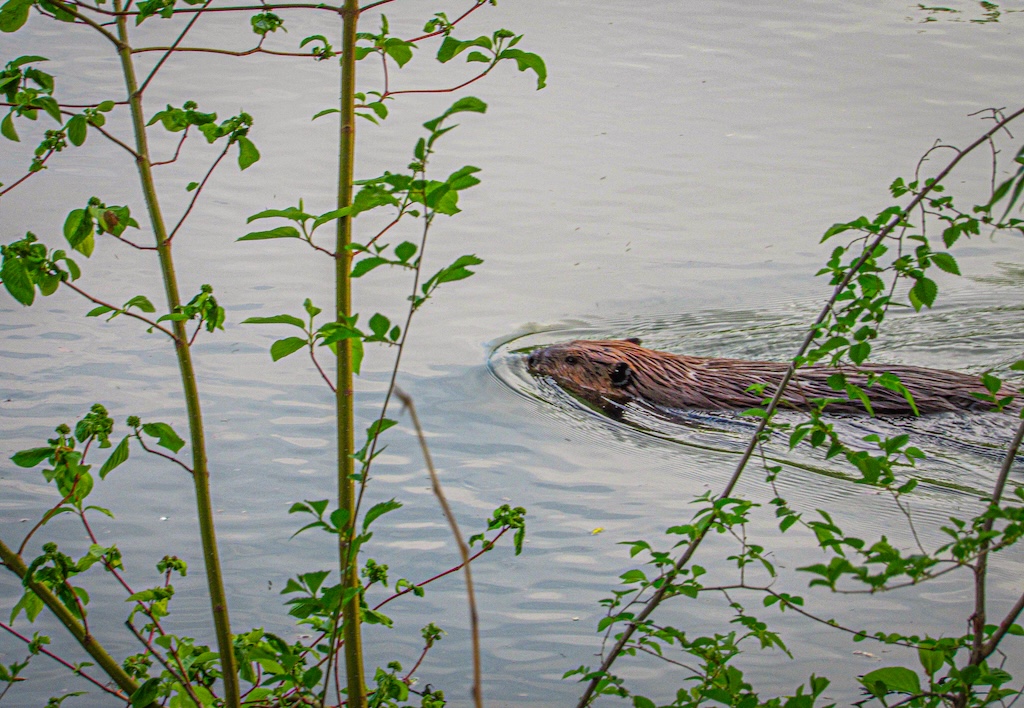
CIC Museum Research Document (Created 2/17/2026) Photograph by Aidan McCarthy. All rights reserved.
Forest Shadows
Black bears (Ursus americanus) are large omnivores found throughout North American forests, with sixteen recognized subspecies each showing subtle differences in size, shape, and color. Here in coastal Washington, sometimes even near the Coastal Interpretive Center, you are most likely to encounter the Pacific Northwest coastal black bear (Ursus americanus altifrontalis), which is typically jet black and slightly larger than inland black bear species.
Changing climate and their changing behaviors
Black bears typically avoid humans, but habitat changes from urbanization, deforestation, and climate change are altering their behaviors and foraging patterns. These pressures cause bears to encroach on developed urban and suburban areas in search of food, where they may rely on less optimal sources such as trash cans. Black bears have incredibly diverse diets in healthy forest ecosystems — gorging themselves on insects, berries, roots, birds, bird eggs, small mammals, or carrion — these food sources become increasingly diminished as land is developed for human activity. Moreover, seasonal shifts in climate also affect the availability of berries, nuts, salmon, and other food sources, forcing bears to adapt their diets.
Disturbed Winter Slumber
Black bears undergo torpor in winter — a state of reduced metabolism that conserves energy when food is scarce in the winter months. Unlike true hibernators such as bats or ground squirrels (whose body temperatures drop dramatically), black bears only lower their body temperature moderately while significantly slowing their heart rate, breathing, and overall metabolism. This allows black bears to awaken more easily and even leave their dens briefly if temperatures warm or food becomes available.
As climate change leads to milder winters and shorter periods of sustained cold, this torpor can be disrupted. Warmer winters are already linked to reduced torpor duration in black bears, with research showing that for every 1 degree Celsius increase in winter temperatures, bears may remain active several more days, increasing energy expenditure when natural foods are not yet abundant.
Coexisting with Black Bears
If you live in a community fortunate enough to co-exist with the American black bear, simple precautions can protect both your family and the bears:
Secure attractants. Store garbage in bear-resistant containers or indoors until pickup day, and remove pet food, bird seed, compost, and food scraps from yards.
Stay alert. Most negative encounters happen when a bear is surprised. Be especially aware in forested or low-visibility areas.
Make noise. Talk or call out in brushy areas to avoid startling a bear.
If You Encounter a Bear: Stay calm and do not run. Pick up small children, keep your group together, and avoid sudden movements. Keep dogs leashed. An unleashed dog can provoke a bear and bring it back toward you.
Give the bear space — wildlife agencies such as the National Park Service recommend at least 100 yards when possible. Slowly back away while facing the bear. Make yourself appear larger and speak firmly. A bear standing on its hind legs is usually curious, not aggressive. In the rare event of an attack by a black bear, fight back.
A Forest Friend in our Neighborhoods
Black bears are magnificent creatures that deserve the dignity of remaining wild. Never feed a bear — intentionally or unintentionally. A bear that learns to seek food from humans loses it can lose its ability to survive naturally and often pays with its life. Coexistence begins with prevention: a fed bear becomes a bear habituated to seeking food from humans, and habituated bears frequently must be relocated or euthanized. Responsible human behavior can keep both bears and communities safe.
In a broader sense, the preservation of healthy forest ecosystems can prevent black bears from wandering into human communities in the first place. Healthy forests provide bears with abundant natural foods, intact habitat, and little reason to seek out our neighborhoods. When wild spaces remain intact and productive, bears remain what they are meant to be: self-reliant, wary of people, and deeply rooted in the rhythms of the forest rather than the contents of a trash can.
Sources:
Black Bear. Washington Department of Fish & Wildlife. (n.d.). https://wdfw.wa.gov/species-habitats/species/ursus-americanus
U.S. Department of the Interior. (2026, March 4). Black bears. National Parks Service. https://www.nps.gov/noca/learn/nature/black-bears.htm
WDFW. (2023, March). Living with Wildlife - Be Bear Aware. Washington Department of Fish & Wildlife. https://wdfw.wa.gov/publications/00606