The Humble Beaver: Hero of the Wetlands
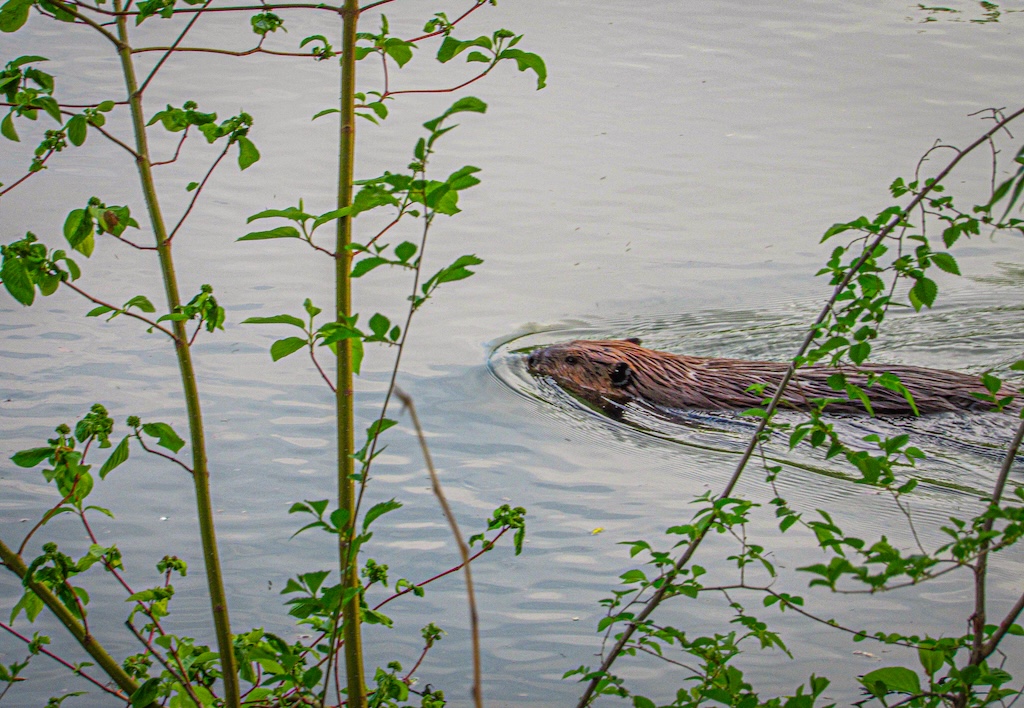
CIC Museum Research Document (Created 2/11/2026) Photograph by Aidan McCarthy. All rights reserved.
Beaver Basics
Beavers are North America’s largest semi-aquatic rodents and the second largest rodents in the world. Often misunderstood as nuisances for felling trees or flooding yards, their impact on the environment is actually overwhelmingly positive. These tireless freshwater engineers work both on land and underwater, reshaping streams, building wetlands, and supporting entire ecosystems. By altering their surroundings, beavers create flourishing habitats.
Drysuit Divers
Adaptations like the beavers’ flat tail, paddle-like feet, a second pair of clear inner-eyelids, their incredible lungs, and warm waterproof coats perfectly equip them for life underwater working like a built-in dry suit. Their flat, scaly, oar-like tails act as steering rudders, guiding sharp turns and quick escapes from predators, while large paddle-like hind feet provide power and agility underwater. Beavers even have “goggles”: a transparent inner eyelid, called a nictitating membrane, that allows them to see underwater. They can also hold their breath for up to 15 minutes, long enough to work, hide, or travel unseen underwater.
Beavers are able to survive underwater in freezing temperatures because of their fur coat. A beavers’ coat has multiple layers: thick guard hairs followed by multiple dense underlayers of fur — up to 20,000 hairs per square centimeter which they groom obsessively with a specialized split claw on their hind foot. These extremely dense underlayers of fur trap a layer of warm air against the beavers’ skin, keeping them warm in otherwise frigid underwater conditions.
The Lumberjack’s Axe
Like all lumberjacks, beavers need a strong axe, and theirs is built into their mouths. A single beaver can chew down an average of 216 trees each year, using powerful front incisors coated in iron-rich enamel that gives them their bright orange color and exceptional strength.
These teeth are more than construction tools. They grow continuously, and without constant gnawing to wear them down, can become overgrown and interfere with feeding. Cutting trees is both a survival necessity and an engineering skill, making each beaver a master woodworker equipped with its own living axe..
Nature’s Construction Workers
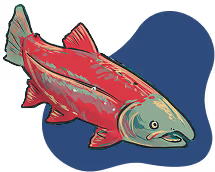
Beavers are ecosystem engineers—animals that quite literally reshape the world around them, building habitats that many other species depend on. These avid engineers are also a keystone species, meaning their influence on an ecosystem is far greater than their numbers might suggest. Keystone species shape ecosystems in different ways: sea otters, for example, keep prey populations in check and help protect kelp forests from overgrazing, while salmon carry nutrients from the ocean deep into forest ecosystems, feeding everything from bears to the soil itself after they spawn and die.
Beavers take this idea of “ecosystem engineering” and turn it into a full-scale landscape transformation project. By building dams, they slow streams and turn narrow, fast-moving channels into broad, thriving wetlands. In the process, they trap sediment and nutrients, reduce downstream erosion, recharge groundwater, and even help keep water cooler through the summer. Their ponds can store thousands of cubic meters of water, acting like natural sponges that buffer floods during heavy rains and keep streams flowing long after the rain has stopped.
Beaver wetlands provide food and shelter for a wide range of species. They help salmon and trout thrive in cool, slow-moving waters. Their dams also help amphibians find safe breeding grounds, providing spaces amphibians can lay eggs where river currents won’t sweep them away. Aquatic insects thrive in beaver ponds, helping to feed animals such as birds, bats, and fish. Waterfowl, otters, muskrats, and many other animals also thrive in these environments.
Protecting Washington’s Vulnerable Wildlife
Beaver dams are vital for protecting vulnerable wildlife across Washington. In the Stillaguamish River Basin (North of the Cascades), the removal of a large beaver dam led to a 61% loss of coho salmon habitat and an 86% reduction in overwintering habitat. In the Skykomish River watershed, relocating beavers back into the ecosystem increased groundwater storage and lowered summer stream temperatures by an average of 2.5 °C (4.5 °F). Cooler, well-stored water helps protect salmon, trout, and other temperature-sensitive species from thermal stress during increasingly hot summers.
In safeguarding water, beavers safeguard Washington’s vulnerable wildlife. By slowing water and storing it across floodplains, beavers provide critical refuge for fish, amphibians, and other aquatic species facing habitat loss and increasing climate stress.
Sources
- Nikole, L. (2025, November 15). How Beavers Became So Sick | Lindsay Nikole. How Beavers Became So Sick. https://www.youtube.com/watch?v=Nt1Q0Ze9rHk
- McKean, T., and C. Carlton. “Oxygen Storage in Beavers.” Journal of Applied Physiology, Respiratory, Environmental and Exercise Physiology, vol. 42, no. 4, Apr. 1977, pp. 545–547, doi:10.1152/jappl.1977.42.4.545. PubMed, https://pubmed.ncbi.nlm.nih.gov/863815/
- Shea, Susan. “How Beavers Survive Adirondack Winters.” The Adirondack Almanack, 9 Dec. 2014, www.adirondackalmanack.com/2014/12/how-beavers-survive-adirondack-winters.html. Accessed 14 Feb. 2026
- World Wildlife Fund. “How Beaver Dams—and Human‑Made Replicas—Help Save Wildlife and Restore Freshwater Habitat.” World Wildlife Fund, 2026, www.worldwildlife.org/resources/explainers/how-beaver-damsand-human-made-replicashelp-save-wildlife-and-restore-freshwater-habitat/
- Pollock, MM, et al. “The Importance of Beaver Ponds to Coho Salmon Production in the Stillaguamish River Basin, Washington, USA.” EPA, Environmental Protection Agency, 2004, hero.epa.gov/reference/3349624/.
- Dittbrenner, Benjamin J, et al. “Relocated Beaver Can Increase Water Storage and Decrease Stream Temperature in Headwater Streams.” USGS, USGS, July 2022, www.usgs.gov/publications/relocated-beaver-can-increase-water-storage-and-decrease-stream-temperature-headwater.