Coyotes in Western Washington
CIC Museum Research Document (Created 3/2/2026) Photograph by Aidan McCarthy. All rights reserved.
A high, wavering howl rises over the landscape at dusk, echoing across forests, farmland, and city streets alike. The owner of this ghostly voice is the coyote, a small but formidable canine endemic to North America. Coyotes thrive both alone and in packs, adapting to live in a wide variety of landscapes both natural and manmade. While now well established in the landscape, their presence here represents over a century of ecological change across North America.
Today, the coyote is widespread across all of North America. However, their historic range spanned from the open plains and deserts from Eastern Washington to New Mexico. Coyotes became established in coastal Washington toward the beginning of the 20th century, expanding westward as Euro-American settlement reshaped forests and prairies through logging, agriculture, predator control, and urban development.
Tracing Species Prevalence Through Local Language
None of the tribes within the Quinault Nation have a word for coyote. Historical accounts and tribal linguistic records documenting the languages of the Quinault, Queets, Quiluete, Hoh, Chehalis, Chinook, and Cowlitz peoples indicate that coyotes were absent from the Olympic Peninsula and the Grays Harbor region until their expansion, which followed the widespread environmental changes brought by settler development.
Domain Expansion
As mid-ranking predators, or mesopredators, coyote populations were historically kept in check by apex predators such as wolves, cougars, and the now-extinct American lion. However, westward European-American settlement dramatically reshaped North American ecosystems. In Western Washington, the local extirpation of gray wolves in the late 1800s and early 1900s was the main driver of coyote expansion, moving westward to fill the ecological void.
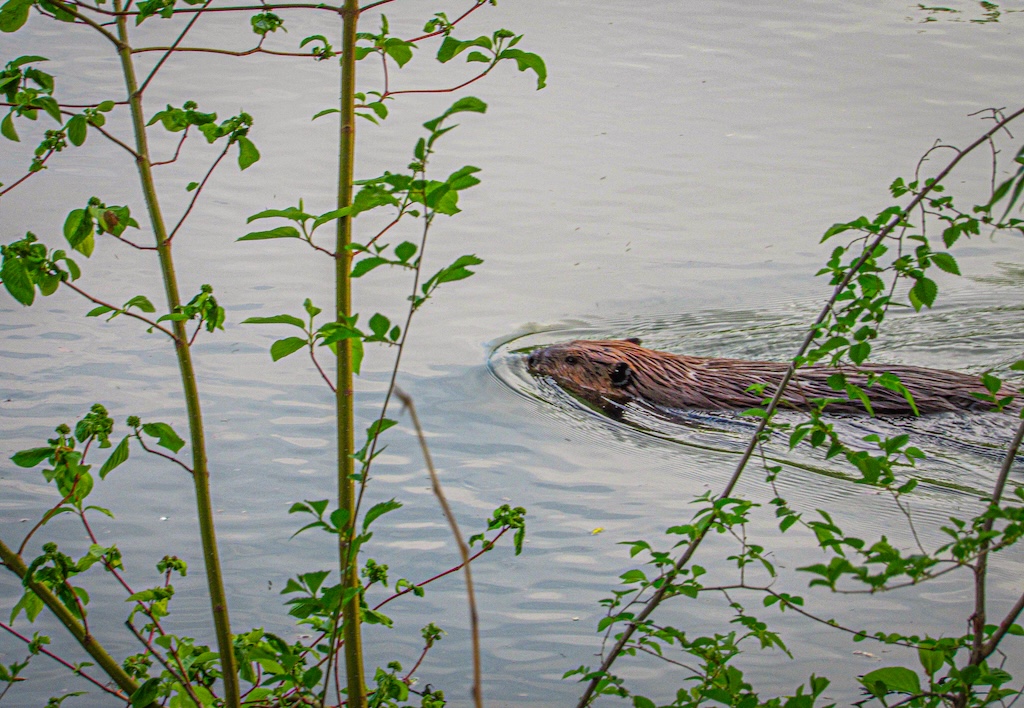
While coyotes share a large portion of their genome with wolves, they are unable to replicate the full ecological function of wolves. Before their removal in Washington, gray wolves greatly influenced the movements of elk and deer, changing browsing patterns and allowing vegetation in riparian areas to recover. By controlling the overgrazing of riparian areas, animals like beavers, songbirds, insects, and numerous other animals are able to thrive. Coyotes lack the size, strength, and cooperative hunting structure to consistently regulate large herbivore populations at that scale. Although coyotes fill part of the ecological gap left by the removal of the wolf, the broader predator–prey dynamics in places like Grays Harbor remain fundamentally different than it did 150 years ago.
While coyotes are unable to fully replicate the benefits of wolves on an ecosystem, their presence is still beneficial. These crafty canines help regulate populations of small mammals such as rodents and rabbits, which can help prevent overgrazing and protect vegetation. Coyotes also prey on vulnerable young deer, influencing herbivore numbers and plant communities. In landscapes altered by logging, agriculture, and urban development, where apex predators have been eliminated, their presence helps to partially restore predator-driven checks and balances. The presence of coyotes on an ecosystem supports biodiversity and ecosystem resilience even in regions where they are not historically native, like Grays Harbor.
A Wide Palate
One of the biggest reasons coyotes thrive in so many environments is their incredibly flexible diet. Coyotes are opportunistic omnivores, meaning they eat whatever is easiest to find. In wilder places like forests, wetlands, deserts, and prairies, their diet might include insects, small mammals, fruit, and carrion. In more developed areas such as suburbs, small towns, and city edges, they quickly adapt by taking advantage of pet food left outside, unsecured trash, garden beds, or even unattended pets.
These clever canines don’t just change what they eat, they change when they eat. In urban areas, coyotes tend to be more active at night, quietly moving through neighborhoods while most people are asleep. This flexibility in both diet and behavior is what makes the coyote such a successful survivor across numerous modern landscapes.
How to Prevent Potential Conflict with Coyotes
Coyotes are naturally wary of humans and rarely pose a direct threat. Most conflicts occur when they gain access to unsecured food sources such as garbage, compost, or pet food. The simplest and most effective way to reduce conflicts is to remove attractants and supervise pets and small children.
Hazing is an important tool for reinforcing a coyote’s natural fear of people. Because coyotes are highly intelligent, relying on a single tactic like yelling can lose effectiveness over time. Using two or more of the following strategies together is recommended:
- Make yourself big and loud: Yell, wave your arms, or flap a jacket overhead to appear larger and more threatening.
- Throw objects safely: Toss sticks, rocks, or other debris near the coyote but not at it unless the animal is actively attacking or pursuing.
- Create noise: Jingle keys, blow a whistle, or bang pots and pans to startle the animal.
- Other deterrents: Hoses, water guns filled with vinegar, pepper spray, bear spray, ultrasonic repellents, or non-lethal projectiles such as rubber bullets or beanbags can also encourage the coyote to keep its distance.
Used consistently, these techniques help coyotes remember that humans are not a food source and maintain a safe distance, keeping both coyotes and people protected.
Sources
- Block, Kitty. “Coyote Hazing: Scare Coyotes off to Keep Them Away.” Humane World for Animals, www.humaneworld.org/en/resources/coyote-hazing. Accessed 3 Mar. 2026.
- WDFW. (n.d.-b). Coyotes in Washington. Washington Department of Fish & Wildlife. https://wdfw.wa.gov/species-habitats/species/canis-latrans
- Point Defiance Zoo and Aquarium - Grit City Carnivore Project. (n.d.). Living with Urban Carnivores. Grit City Carnivore Project. https://gritcitycarnivores.org/quick-facts