Fascinating Fulgurite Formations
CIC Museum Research Document (Created 3/6/2026) Creative Commons photograph
Electrified Earth
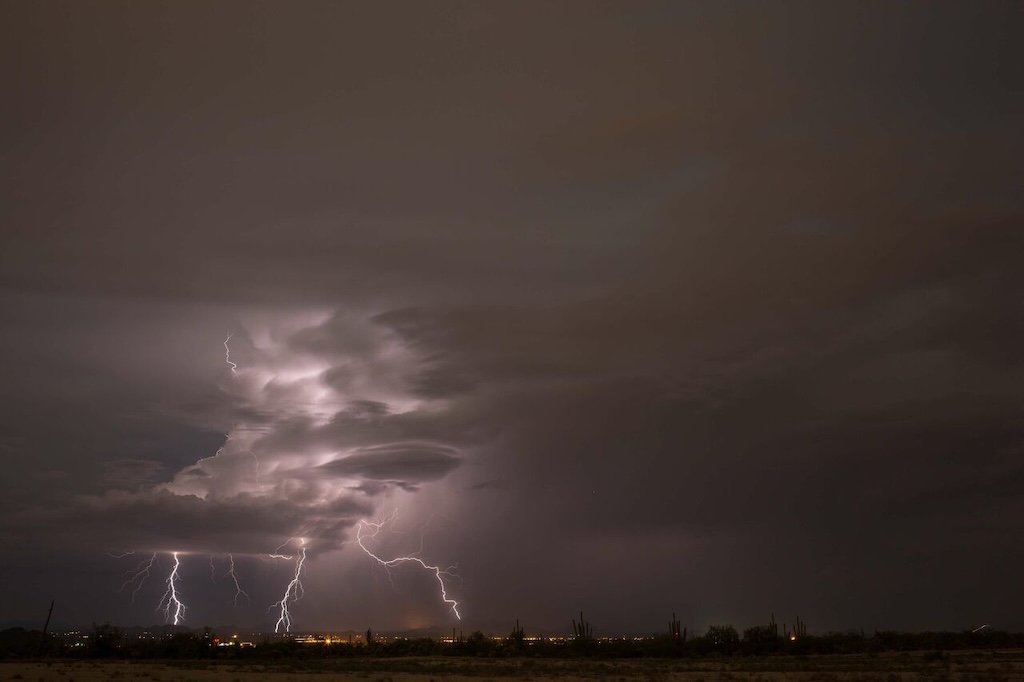
Above Ocean Shores, clouds gather and rain patters down, but an ominous rumble signals that this is no ordinary downpour. In an instant the air becomes electric, heralding an incendiary crack of lightning. A purple bolt of pure energy slashes and zigzags through the air, striking a power transformer on Ocean Lake Way and Ocean Shores Blvd.
When that bolt of lightning struck the top of the wooden telephone pole and transformer box, the electrical energy suddenly needed a path to the ground. Lightning carries an enormous electric current, often tens of thousands of amps, and it moves extremely quickly. Since the pole was tall and exposed above the landscape, it acted as a convenient pathway for the discharge to reach the earth.
At the moment of the strike, the electrical current traveled down the metal hardware and wires attached to the pole, even moving through the wood itself. Wood is normally a poor conductor, but lightning is powerful enough to force a current through materials that usually resist electricity. The intense energy rapidly heats the moisture inside the wood, turning any water inside and around the telephone pole to turn into steam, then the pole bursts into flames.
Petrified Lightning
Lightning can reach temperatures of roughly 30,000°C (54,000°F), which was hot enough to instantaneously liquify the surrounding silica-rich soil at the base of the telephone pole. The molten material cooled and solidified almost immediately, leaving behind a brilliant glassy mineral called fulgurite , or petrified lightning.
Fulgurite Structure
The structure of a fulgurite is fascinating because its hollow tubes and branching shapes follow the exact path a bolt of lightning takes as it shoots through the ground. In a sense, fulgurites are frozen lightning trails, preserving the route of that sudden burst of intense electrical energy.
The inside of a fulgurite is smooth and glassy, while the outside is rough and often coated with grains of partially melted sand. These fulgurites can come in a range of colors, from tan or brown to green or black, depending on the minerals present in the surrounding soil. The Coastal Interpretive Center’s specimen is a striking deep ruby red. This coloration is because the soil where the lightning struck contained a high concentration of iron, which tinted the molten glass red.
Living with Lightning:
Tall, human-built structures like telephone poles, radio towers, and skyscrapers are more likely to be struck by lightning because their height places them closer to the charged region beneath a storm cloud. As a lightning channel develops, it sends branching electrical “leaders” toward the ground. Tall structures can attract these electrical leaders and provide a convenient path for the electrical discharge to reach the earth. In open landscapes especially, isolated structures may stand out as the most accessible connection between cloud and ground.
People have learned to live with this natural hazard by guiding lightning rather than trying to prevent it. One of the most important tools is the lightning rod, first developed in the eighteenth century by Benjamin Franklin. A lightning rod is a pointed metal conductor mounted at the highest point of a structure. When lightning strikes, the rod channels the current through metal cables and safely into the ground instead of through wood, brick, or electrical systems. Contrary to popular belief: lightning rods do not attract lightning, they simply provide a safer route if a strike occurs.
Modern electrical infrastructure uses similar strategies. Utility poles and transformers often include grounding wires, surge protectors, and conductive pathways that direct electrical surges into the earth before they can damage equipment. However, even with these protections in place lightning still strikes power lines, poles, and electrical equipment thousands of times each year. In places like Ocean Shores, where power lines and transformers stand prominently above the surrounding landscape, lightning strikes are a natural and familiar part of coastal storms.
Geology in Action
Most geological processes unfold slowly, shaping the earth over thousands or even millions of years. Yet fulgurite reveals that geology can also happen in a single electrifying instant. What might have seemed like a fleeting moment during a coastal storm instead left behind a lasting geological record. The ruby red fulgurite recovered after lightning struck is evidence of that brief but powerful interaction between sky and earth. This facinating fulgurite formation reminds us that geology is not only something that happened in the distant past, but something that continues to occur all around us, sometimes slowly and sometimes in the flash of lightning.
Sources
- US Department of Commerce, N. (2024, July 1). Understanding lightning. National Weather Service. https://www.weather.gov/safety/lightning-science-scienceintro
- Essene, E J, and D C Fisher. “Lightning strike fusion: extreme reduction and metal-silicate liquid immiscibility.” Science (New York, N.Y.) vol. 234,4773 (1986): 189-93. doi:10.1126/science.234.4773.189
- Jiang, R., Lyu, W., Wu, B., Qi, Q., Ma, Y., Su, Z., Wu, S., Xie, Z., & Tan, Y. (2020, July). Simulation of cloud-to-ground lightning strikes to structures based on an improved stochastic lightning model. Journal of Atmospheric and Solar-Terrestrial Physics. https://www-sciencedirect-com.rider.idm.oclc.org/science/article/abs/pii/S0010440X1500067X?via%3Dihub=
- US Department of Commerce, N. (2018, April 20). Lightning rods. National Weather Service. https://www.weather.gov/safety/lightning-rods
- Lightning Protection Overview. Lightning Protection Institute. (2023, June 27). https://lightning.org/lightning-protection-overview